
A clean and shining pool is the main attraction to the guest and a comforting spot to relax in summer. The secret behind the magnetic pool is the salt cell that acts like a superhero and tries its best to keep your pool clean, safe and eye catching. Saltwater pools are the most wanted choice of every house owner in Darwin due to their softer feel, lower chlorine levels and less need for chemicals. But even the most powerful heroes get retired and need replacement. Just like other important tools of your pool, salt also needs its farewell after some time. It is crucial to know when to replace the salt cell to save yourself from unclear water and stress.
Sustaining a clean and clear pool more than just regular cleaning or balancing chemistry. The cell plays an essential role in keeping your pool safe and clear. When your salt starts showing signs of falling apart, it is time to find a replacement.
Figuring out this problem alone is hard but luckily you found the right page. In this blog we will offer you a complete guide on how to know the signs your salt chlorinator cell is failing and when to replace them. So read the blog till the end and get expert help.
What is a salt cell and its role in a pool?
The salt cell is also known as the salt chlorinator cell or simply the cell, which is the main organ of the cleaning system. It is a tiny chemical factory lodged in the plumbing of pools that have a clear or PVC tube holding metallic plates which help electricity to pass through. Saltwater pours from your pool through this cell and plates. The electricity breaks down the salt into natural chlorine which immediately cleans and sanitizes the water.
Even though the cells are usually self cleaning, sometimes they get coated with calcium buildup over time and become unable to work properly. It is important to clean them with a special acid solution every 3 to 6 months for better results.
Role of the Salt Cell in a Pool
A salt cell plays a crucial role in a pool.
- Convert salt into chlorine
The main function of the salt cell is to naturally make chlorine from salt so you do not have to buy, store and add chlorine tablets manually.
- Non stop cleaning
It cleans the pool regularly when the pump is running and keeps the water clear and algae free. It kills all the germs and bacteria in the pool.
- Soft water
The salt makes the water soft. Smooth and less harsh on eyes, skin and body. It does have a harsh or strong smell like traditional chlorine pools.
- Less amount of chemicals
It maintains a uniform chlorine level and reduces the need for shock and other chemical requirements.
Signs Your Salt Cell Needs Replacement
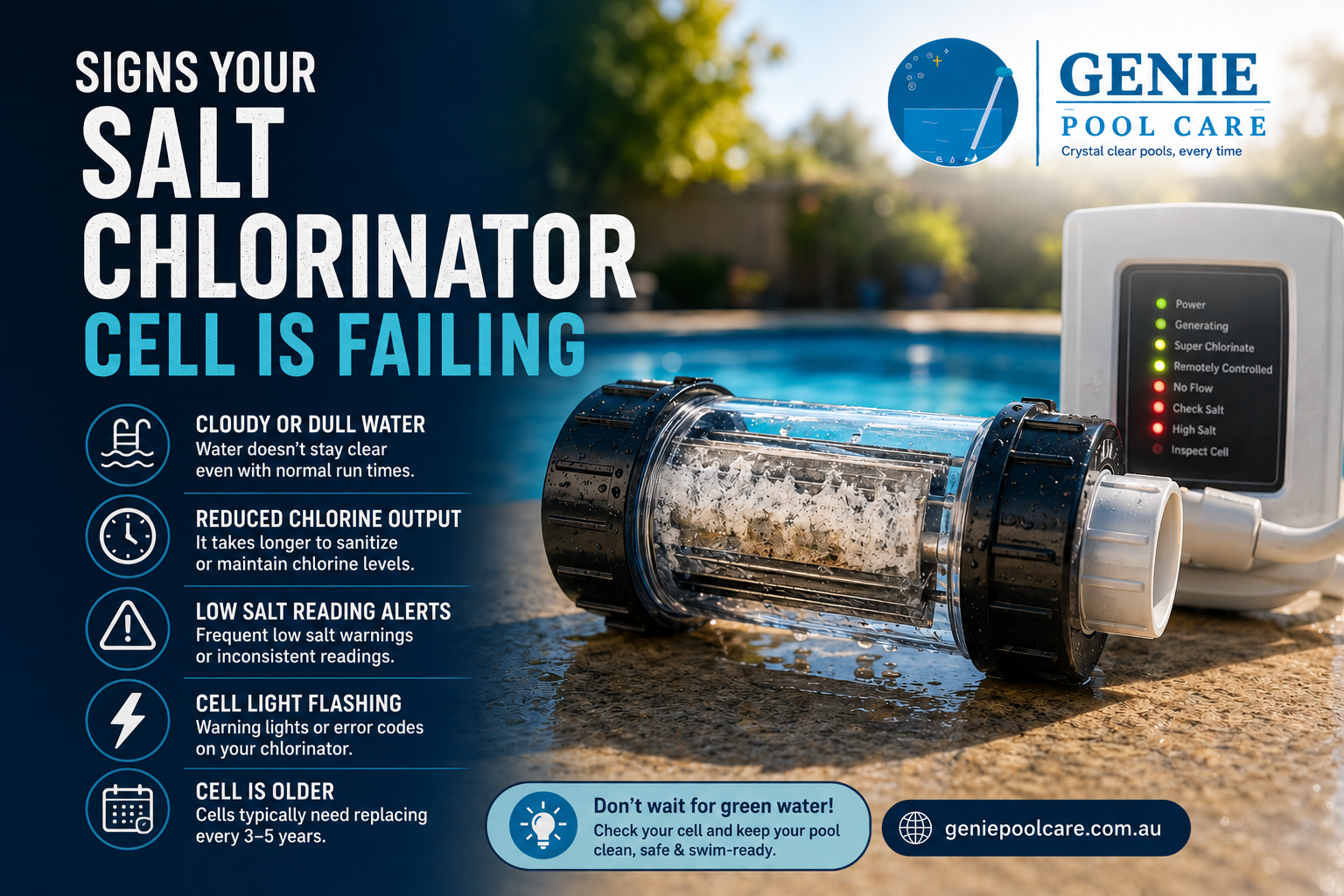
Even the best salt cell has a very short lifespan that generally lasts between three and seven years depending on water chemistry, use and maintenance practices. If your pool is not shining and looking clear maybe it is losing its spark and telling you something.
Here are some common signs that the salt cell is not working and needs replacement.
- Low chlorine level
If the chlorine level in your pool is decreasing even with proper salt level and regular care. You cannot keep a stable free chlorine level even after cleaning the cell and running the pump at high settings and it will not convert salt into chlorine properly as it always does.
- Green pool
One of the most noticeable signs that your chlorinator cell is not working properly is the existence of algae or water that starts turning green. This means that the chlorine in your pool is low to fight algae growth which can fast turn a sparkling pool into a clouded mess.
- Buildup of minerals
Even self cleaning cells can collect calcium deposits over time which can slow their performance. If you see a sudden buildup that does not get cleaned off properly, it can be a sign that your small cell is no longer operating at its best.
- Cell Age
The normal lifespan of a cell is three to seven years. Some high class model cells can last longer with good care. If your cell is getting older than this range, it is time to give it a farewell and replace it.
- Low salt alert
Modern cells usually show salt and chlorine production degrees. If these alerts become irregular or are always low even after adding salt and cleaning the cell it is a firm indicator that the cell is wearing out.
- Pool care
If you are regularly fighting algae or cloudy water despite active care and cleaning. A failing salt cell is not developing enough chlorine to keep your pool in perfect shape.
- Physical Damage or Breakdown
Inspect for rusty or detached plates inside the cell. While some buildup can be cleaned, significant broken plates indicate it is time for a new cell.
Why Do Salt Cells Wear Out?
Salt cells wear out because they have a fixed lifespan depending on the quantity of chlorine they have, generally surviving about 3 to 7 years. Titanium plates in the cells are covered with certain metals that erode away due to a continuous chemical process called electrolysis. When the layer disappears, the cell can not convert salt into chlorine. Also, high calcium levels in the pool, wrong pH balance or operating the cell at full power for a long time force white calcium scales to build up on the plates and make them work harder, overheat and fail.
How to Extend the Life of a Salt Cell?
Here are some suggestions on how to clean salt cells and extend their life.
- Clean regularly and properly when it is necessary.
- Maintain the balance of water chemistry.
- Do not run the salt generator at 100 percent if it is not essential.
- Always make sure to review the water temperature.
- Check and use the salt level properly.
- Use good quality salt.
- Remove the cell and clean it in the winter season to prevent it from being damaged.
Why choose Genie Pool Care?
- Expert diagnosis and care
Our expert team has years of training in detecting the signs of salt cell failure and uses modern tools and methods to diagnose the issue and provide effective solutions to manage the health of your pool.
- Reliable service
We make sure your pool stays clean and properly sanitized. Our team regularly manages your pool system, including salt cells to stop sudden breakdown and manage performance.
- Transparent and clear pricing
With us, you get all the information about what to expect and what to pay for. Whether it is a small fix or a major repair, we provide clear recommendations and clear pricing so there are no surprises.
- Safe and Eco Friendly approach
We use eco friendly products and cleaning techniques to keep the proper balance of chemicals in the pool even when your cell is not functioning properly. This guarantees your pool stays safe for your family, pets and the environment.
Final thoughts
Your pool is more than just a fill up of water. It is a place to have the best cool party with your friends, a warm picnic to spend quality time with family or an escape place to calm down all your stress. A place that provides so much comfort to you deserves more than just a formal cleaning. Keeping it clean and sparkling depends on the better performance of salt cells. Understanding the signs of the cell falling and when to replace the salt cell helps in getting a clean, safe and clear pool.
Managing this problem is hard. That is why we chose the best salt cell replacement Darwin service with us. At Genie Pool Care, we feel every pool owner deserves clean, healthy and perfectly balanced water without the tension of dealing with technical issues like a failing salt chlorinator cell. If the system stops working correctly, it can create unsafe water conditions and make repairing costly. That is why we provide reliable and professional pool maintenance services in Darwin that quickly determine and solve cell problems so you can enjoy peace of mind and a safe swimming environment.
FAQS
How do I know if my salt cell is bad?
- Low chlorine level
- Green pool
- Buildup of minerals
- Low salt alert
- Material Damage
What is the life of a salt chlorinator cell?
The life of a salt cell generally lasts between three and seven years depending on water chemistry, use and maintenance routines.
Can a chlorinator cell be repaired?
It is possible to repair a chlorinator cell. We also offer cell repairs. Bring your cell to us and we will test it for its output. We will replace terminals, plates, cell caps and more.
Can I use vinegar to clean a chlorinator cell?
Vinegar can be used to clean a chlorinator cell but it can take so much time to dissolve the buildup.
How to Extend the Life of My Salt Cell in a Pool?
- Clean regularly and properly when it is necessary.
- Maintain the balance of water chemistry.
- Do not run the salt generator at 100 percent if it is not essential.
- Always make sure to review the water temperature.
- Check and use the salt level properly.
- Use good quality salt.
- Remove the cell and clean it in the winter season to prevent it from being damaged.